
FX Risk: How to Mitigate it in B2B Payments
Foreign exchange risk affects businesses dealing with international currencies. Learn the three major FX risks: transaction, translation, and economic risk.
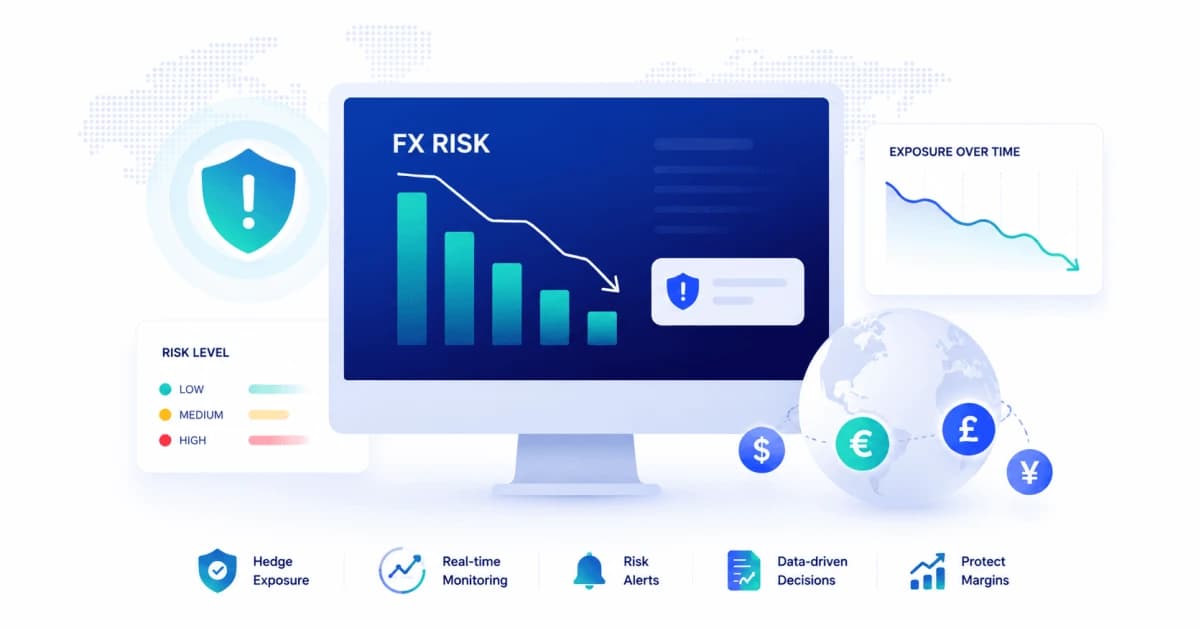
Foreign exchange risk affects businesses dealing with international currencies. Learn the three major FX risks: transaction, translation, and economic risk.
FX risk can be categorized into three main types:
1. Transaction risk
Transaction risk occurs when a business has agreed to a future transaction in a foreign currency but is exposed to changes in exchange rates between the time the agreement is made and the time the payment is settled. This risk arises from the need to convert currencies at the time of the transaction. If the exchange rate changes unfavorably, the business might end up paying more than originally planned or receiving less.
2. Translation risk
Translation risk (also known as accounting risk) arises when a company has assets, liabilities, or revenue denominated in foreign currencies. When financial statements are consolidated into the company's reporting currency, fluctuations in exchange rates can affect the value of these foreign-denominated assets or liabilities. This risk primarily affects companies with international subsidiaries or operations in multiple countries.
3. Economic risk
Economic risk (also called operational or strategic risk) refers to the longer-term impact of exchange rate fluctuations on a company's market position and competitive advantage. For example, if a business relies heavily on exports, a weaker local currency might make its products more affordable and attractive to foreign buyers, but it may also increase costs for imported raw materials, thus affecting the overall profitability.
